

What happened?
A new cultural trend called “bhajan clubbing” is gaining popularity across India, especially among young audiences. The trend recently entered mainstream political and cultural discourse after Prime Minister Narendra Modi mentioned it in his first Mann ki Baat address of 2026, describing it as a fusion where “spirituality and modernity merge beautifully.”
What is bhajan clubbing?
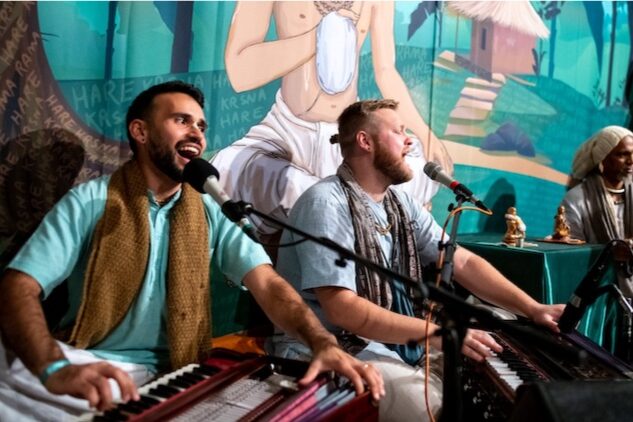
Bhajan clubbing is a contemporary reinterpretation of traditional bhajans and kirtans, presented in a club-like, high-energy concert format.
Key features include:
- Call-and-response chanting
- Amplified music and rhythmic beats
- Large crowds and immersive lighting
- Strong emphasis on collective participation
The format borrows from both devotional traditions and modern concert culture, making spirituality accessible in spaces usually associated with nightlife and entertainment.
Why is it becoming popular?
🎧 Youth connect
In a generation shaped by social media, anxiety, and political uncertainty, bhajan clubbing offers:
- A sense of grounding
- Emotional release
- Collective experience without intoxication
Sold-out shows by international kirtan artists such as Krishna Das and Radhika Das indicate that the format resonates deeply with India’s urban youth.
🌍 A familiar global pattern
For older generations, the phenomenon recalls the 1960s counterculture movement, when Western youth turned to Eastern spiritual traditions like yoga, meditation, and Indian classical music in search of meaning.
The editorial draws a parallel with:
- The Beatles’ 1968 retreat to Rishikesh
- A period when spirituality reshaped music, creativity, and ideas of fame
This raises an important question:
👉 Is bhajan clubbing just a trend, or the beginning of a deeper cultural shift?
Cultural shift or spectacle?
The editorial remains cautiously optimistic.
Two possibilities emerge:
- Surface-level novelty – a fashionable blend of devotion and performance, driven by spectacle and social media
- Deeper re-engagement – a gateway for younger generations to reconnect with traditions, spirituality, and inner reflection
Whether bhajan clubbing leads to sustained spiritual inquiry or fades once its novelty wears off remains uncertain.
Why does this matter?
Bhajan clubbing reflects:
- Changing ways of engaging with religion and culture
- The adaptability of Indian traditions across generations
- A broader search for meaning in an age of hyper-connectivity and instability
It highlights how culture is not static, but continuously reinterpreted to remain relevant.
🔚 Conclusion
Bhajan clubbing sits at the crossroads of devotion and entertainment. Whether it becomes a transformative cultural moment or remains a passing phase will depend on what follows after the music stops.