

What Happened
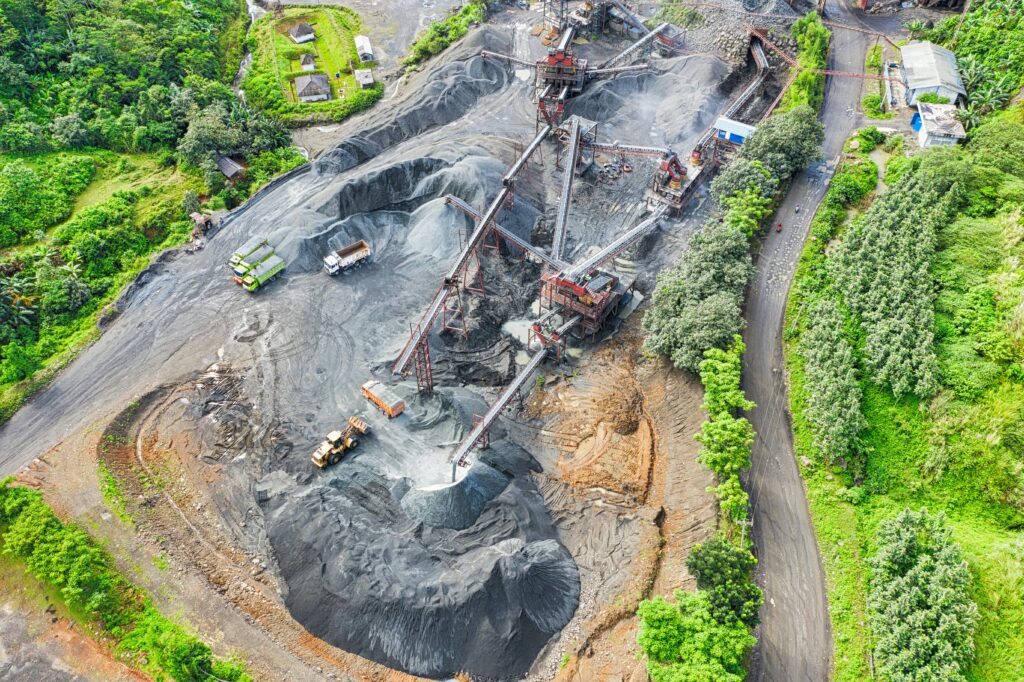
In November 2025, the Supreme Court issued an order redefining what qualifies as an “Aravalli hill” and temporarily freezing new mining leases in the Aravalli region until a sustainable mining plan is prepared. The Court also directed that mining be prohibited in core ecological areas, while allowing limited exemptions for critical, strategic, and atomic minerals.
Context: Why the Aravallis Are Central to This Debate
The Aravalli Range is one of the oldest mountain systems in the world, formed over two billion years ago. Stretching across Delhi, Haryana, Rajasthan, and Gujarat, the range functions as the ecological backbone of north-western India. Unlike younger mountain systems, the Aravallis are heavily eroded and exist mostly as low-lying hills, ridges, and slopes rather than tall peaks.
Over decades, mining, construction, and urban expansion have degraded large parts of the range. These pressures raised concerns about desertification, groundwater depletion, air quality deterioration, and biodiversity loss, particularly affecting the Delhi-NCR region and western India. The recent court intervention was aimed at resolving long-standing disputes over how the Aravallis should be legally identified and protected.
Why the Supreme Court’s Definition Triggered Concern
The 100-Metre Threshold
The Court accepted a uniform definition under which only landforms rising at least 100 metres above the surrounding ground would qualify as Aravalli hills. The government argued this brought consistency across states.
However, environmental experts point out that most of the Aravalli system consists of low-height ridges and hillocks. According to assessments by the Forest Survey of India, nearly 90% of the range could fall outside legal protection under this definition.
Fragmentation of the Range
The order also defined a “range” as two or more qualifying hills located within 500 metres of each other. Critics argue that this approach protects isolated peaks but leaves valleys, slopes, and connecting ridges open to mining and construction, breaking the continuity of the ecosystem.
Why the Aravallis Matter Ecologically
Barrier Against Desertification
The Aravallis act as a natural barrier preventing the Thar Desert from expanding eastwards into Haryana, western Uttar Pradesh, and the Delhi region. Lower ridges and slopes play a critical role in blocking desert winds and sand movement.
Groundwater and Water Security
The fractured rock structure of the Aravallis allows rainwater to seep underground, recharging aquifers that supply water to cities such as Gurugram, Faridabad, Jaipur, and Delhi. Many seasonal rivers also originate in the range.
Climate Regulation and Air Quality
Forested sections of the Aravallis are known to be cooler than surrounding urban areas and help reduce heat stress. The hills also trap dust particles, improving air quality in densely populated regions.
Biodiversity Corridor
The range serves as a wildlife corridor connecting protected areas, allowing movement of species such as leopards and hyenas. It also supports native plant species adapted to semi-arid conditions.
Legal and Policy Implications
Mining and Strategic Exemptions
The Court allowed mining exceptions for minerals classified as critical or strategic under the Mines and Minerals (Development and Regulation) Act. While intended to support national needs, critics fear this could open the door to expanded mining activity.
Shift From Earlier Jurisprudence
Earlier Supreme Court rulings relied on a slope-based criterion, where land with a slope steeper than three degrees was treated as a hill. Moving to a height-based definition marked a significant departure from this approach.
Recognising these concerns, the Court has stayed its own November 2025 order and directed the formation of a high-powered expert committee to reassess Aravalli protection using scientific and ecological principles.
What Could Be the Way Forward
- Using slope-based and landscape-level definitions to protect low-lying ridges and recharge zones.
- Treating the Aravallis as a continuous geological system rather than isolated peaks.
- Implementing a Management Plan for Sustainable Mining with strict no-go zones.
- Restoring degraded areas through the proposed Aravalli Green Wall Project.
- Using satellite monitoring and community participation to prevent illegal mining.
Why This Matters
For citizens, weakening Aravalli protection threatens water security, air quality, and climate resilience.
For governance, it highlights the challenge of balancing development, mineral needs, and environmental protection.
For policy, it raises questions about how ecological systems should be legally defined.
For the future, decisions taken now will determine whether the Aravallis remain a functional ecological shield or continue to degrade.
What Readers Should Understand
The controversy is not about protecting tall hills alone, but about safeguarding an entire ecological system that operates through low-lying ridges, slopes, forests, and valleys. The Supreme Court’s pause and reassessment recognise that environmental protection requires scientific understanding, not just uniform definitions. How India resolves this issue will shape long-term environmental governance in the region.