

What happened?
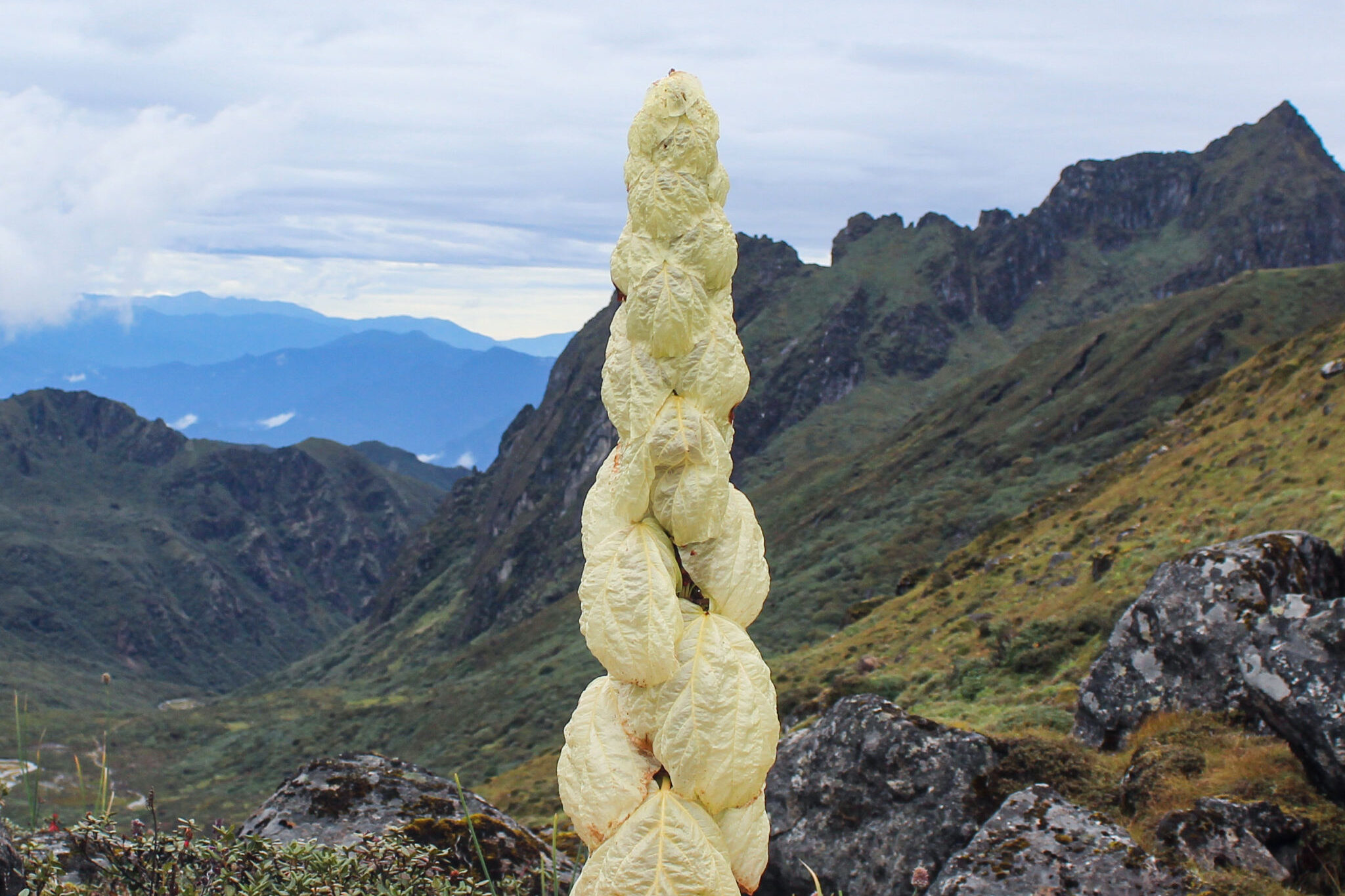
A rare Himalayan plant known as Sikkim Sundari has recently drawn attention due to its unique biological structure and survival strategy in extreme high-altitude conditions.
What is Sikkim Sundari?
Sikkim Sundari (Rheum nobile) is a giant herbaceous perennial plant found in the alpine zones of the Himalayas, growing at altitudes between 4,000 and 4,800 metres.
It is native to:
- North Sikkim
- Nepal
- Bhutan
- Tibet
- Myanmar
The plant typically grows on open alpine slopes, glacial valleys, rocky ledges, and tundra-like environments, where temperatures are low and ultraviolet radiation is intense.
Why is Sikkim Sundari special?
1️⃣ Natural “Glasshouse” Structure
The most striking feature of Sikkim Sundari is its tall, translucent bracts.
These leaf-like structures:
- Trap solar heat
- Protect flowers from freezing winds
- Shield reproductive parts from intense UV radiation
This creates a natural greenhouse effect, allowing the plant to survive in one of Earth’s harshest climates.
2️⃣ A Rare Life Cycle
Sikkim Sundari is a monocarpic plant, meaning:
- It flowers only once in its entire lifetime
- It can spend 7 to 30 years storing energy as a low-growing rosette
- After a single, dramatic bloom into a tall, pagoda-shaped spike, the plant sets seed and dies
This strategy ensures successful reproduction despite extreme environmental stress.
3️⃣ Ecological Significance
- The plant is part of fragile high-altitude Himalayan ecosystems
- It reflects how species adapt to cold, low oxygen, and high UV exposure
- Its presence indicates relatively undisturbed alpine habitats
4️⃣ Cultural and Medicinal Importance
- Locally known as padamchal
- The stem is consumed for its acidic taste, often used as chuka
- Used in traditional Himalayan and Tibetan medicine
Why does Sikkim Sundari matter?
Sikkim Sundari highlights:
- The extraordinary biodiversity of Himalayan alpine regions
- The importance of conserving high-altitude ecosystems
- How climate change could threaten species adapted to narrow ecological limits
Its slow growth and single-bloom life cycle make it especially vulnerable to habitat disturbance and warming temperatures.
What should readers understand?
Sikkim Sundari is not just a beautiful plant—it is a living example of evolutionary adaptation and a reminder of why Himalayan biodiversity requires careful protection.
🔚 Conclusion
Sikkim Sundari stands as a symbol of resilience in extreme environments. Protecting such species is essential for preserving the ecological balance and natural heritage of the Himalayas.